When it comes to protecting your chimney, two common terms often come up chimney crown and chimney cap. Homeowners sometimes use them interchangeably, but they are two very different components with unique purposes. Understanding the distinction between them can help you better maintain your chimney system, extend its life, and avoid costly repairs down the road.
At Frechette Chimney Sweeping, we believe in educating homeowners so they can make informed decisions about chimney care. In this guide, we’ll walk you through the roles of crowns and caps, their key differences, and why both are essential for a safe, functional chimney.
What is a Chimney Crown?
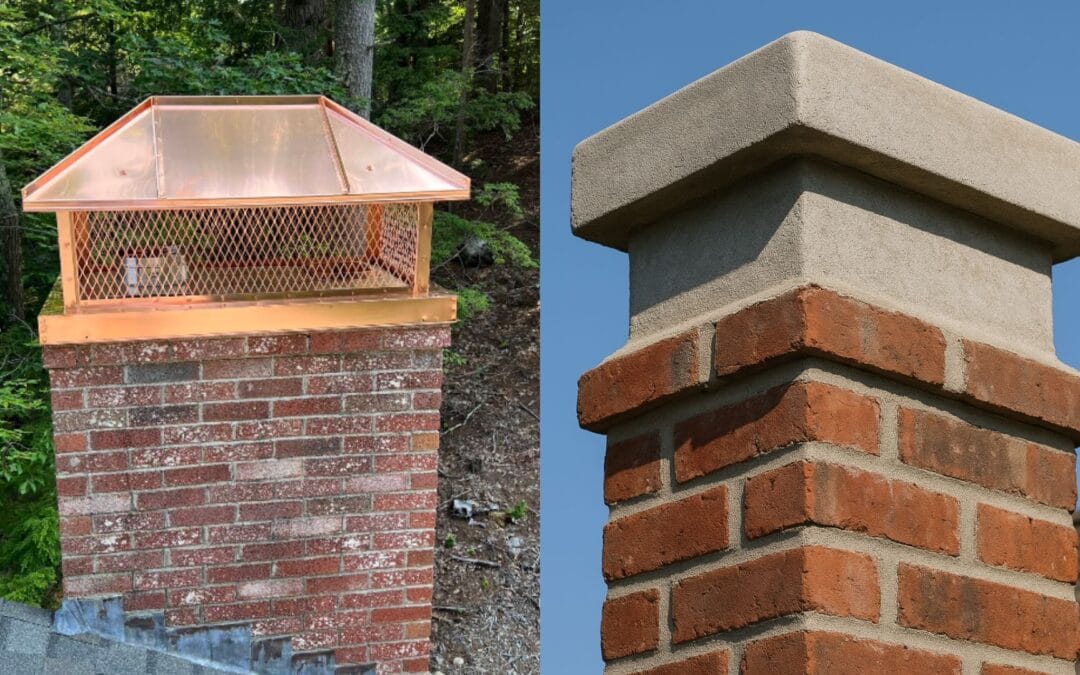
The chimney crown is a large slab of cement, concrete, or masonry material that sits on the very top of the chimney structure. Its purpose is to cover the entire top opening of the chimney chase, except for the flue.
Think of it as a roof for your chimney. Its angled design helps direct rainwater away from the brick and mortar below, preventing moisture from soaking into the masonry.
Functions of a Chimney Crown:
- Weather Protection – Shields the masonry from rain, snow, and ice.
- Prevents Erosion – Keeps moisture from seeping into the bricks, which can lead to cracking or spalling during freeze-thaw cycles.
- Structural Support – Provides a solid top layer that ties together the chimney’s upper structure.
A properly built crown should extend beyond the chimney’s sides with a “drip edge” so water doesn’t run down the walls. Without it, your chimney is left vulnerable to water damage.
What is a Chimney Cap?
While the crown protects the chimney structure, the chimney cap protects the flue opening itself. A cap is typically a metal covering—often made of stainless steel, copper, or galvanized steel—installed over the top of the flue.
It usually features a sloped top with mesh sides. This design allows smoke and gases to escape while keeping unwanted elements out.
Functions of a Chimney Cap:
- Keeps Out Rain & Snow – Prevents direct water entry into the flue.
- Blocks Animals & Debris – Stops birds, squirrels, raccoons, leaves, and twigs from entering.
- Improves Safety – The mesh acts as a spark guard, reducing the risk of sparks landing on the roof or yard.
- Prevents Downdrafts – Helps stop strong winds from forcing smoke and cold air back into your home.
In short, the chimney cap is the first line of defense for the flue, keeping it clear and safe for venting.
Crown vs. Cap: The Key Differences
Although they both sit at the top of your chimney, crowns and caps serve very different purposes. Here are the main distinctions:
| Feature | Chimney Crown | Chimney Cap |
| Material | Concrete, cement, masonry | Metal (stainless steel, copper, galvanized steel) |
| Placement | Covers the entire top of the chimney | Sits directly on top of the flue |
| Primary Function | Protects the masonry structure | Protects the flue opening |
| Water Protection | Directs water away from chimney walls | Prevents water from entering the flue |
| Additional Benefits | Structural stability, prevents brick damage | Keeps animals, debris, sparks, and downdrafts out |
In essence:
- The crown protects the chimney itself.
- The cap protects the inside of the flue.
Both work together to keep your chimney safe and long-lasting.
What Happens If You Don’t Have One or the Other?
Many chimneys are missing one of these critical features. Here’s what can happen if either is absent:
- No Crown: Moisture seeps into the bricks and mortar, leading to cracks, spalling, leaks inside your home, and eventually expensive structural repairs.
- No Cap: Animals may nest in your chimney, debris can block the flue, rain can drip directly inside, and sparks could pose a fire hazard.
Neglecting either component means your chimney will deteriorate faster, and you may face costly repairs or safety issues.
Signs of Crown or Cap Problems
Like any other part of your home, crowns and caps wear down over time. Here are some warning signs to watch for:
- Chimney Crown Issues:
- Visible cracks or crumbling edges
- Water stains inside the chimney
- Bricks below the crown showing signs of damage
- Chimney Cap Issues:
- Missing or detached cap
- Rust or corrosion
- Mesh bent or broken
- Water or debris inside the firebox
If you notice any of these, it’s time to call a chimney professional for inspection and repair.
Professional Installation and Maintenance
Both chimney crowns and caps need to be properly installed to do their job effectively. DIY fixes often don’t provide the long-term protection your chimney needs.
At Frechette Chimney Sweeping, our technicians:
- Inspect crowns and caps for wear and tear.
- Seal or rebuild cracked crowns with quality masonry materials.
- Install durable stainless-steel chimney caps for long-lasting protection.
- Recommend routine inspections to catch problems early.
With professional care, your chimney crown and cap can protect your fireplace system for decades.
Why Both Are Essential
Some homeowners ask, “If I have a cap, do I really need a crown?” or vice versa. The truth is that both are necessary:
- The crown preserves the chimney’s structure.
- The cap keeps the flue safe and functional.
Together, they form a complete protective system, shielding your home from water, wildlife, and structural deterioration.
Final Thoughts
The chimney crown and cap may sound similar, but they perform very different roles in keeping your chimney safe. The crown protects the outside masonry, while the cap defends the inside flue. Without them, your chimney is at risk of serious water damage, blockages, and safety hazards.
At Frechette Chimney Sweeping, we specialize in repairing, replacing, and maintaining both crowns and caps. Whether you’re dealing with cracks in your crown or missing chimney caps, our team ensures your chimney system stays safe, efficient, and long-lasting.
Frechette Chimney Sweeping
1550 Main St, Sanford, ME 04073
(207) 608-0564
Recent Comments